

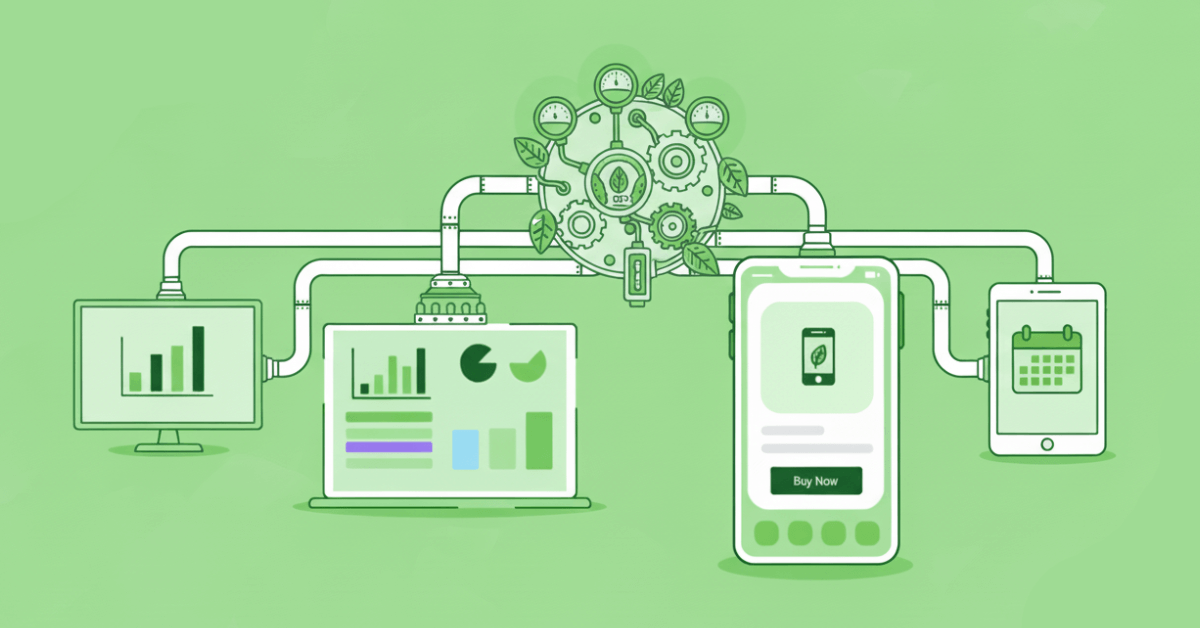
From Mad Men to Algorithms for Programmatic Advetising
The Evolution of Media Buying
Programmatic advertising refers to the practice of automating media buying and creating digital ads with the use of marketing technology. This methodology signifies a dramatic shift from traditional advertising methods. Historically, conventional marketing involved time-intensive processes such as developing requests for proposals (RFPs), obtaining quotes, conducting negotiations, and creating insertion orders (IOs). Programmatic buying, conversely, uses computer software to purchase online ad space automatically, relying on a data-driven approach rather than guesswork or intuition.
Programmatic advertising has fundamentally revolutionized media buying. Its adoption surged in the early 2010s, fueled by advancements in AI and machine learning that revolutionized targeting and optimization. Global programmatic ad spend reached an estimated $595 billion USD in 2024 and is forecasted to reach nearly $800 billion USD by 2028. It is evident that brands that do not adopt solid programmatic advertising strategies may miss out on crucial benefits such as efficiency, reach, transparency, and accountability.
The Core Mechanism: Real-Time Bidding (RTB)
Defining the Automated Process
Programmatic advertising utilizes software and advanced algorithms to buy, sell, and optimize digital ad placements. It serves relevant ad impressions to audiences through automated steps, in less than a second. This use of computer software automates repetitive tasks and streamlines workflow processes.
The Millisecond Auction (RTB)
Real-Time Bidding (RTB) is the most common way to buy ads programmatically. It is a system where advertisers participate in an auction when an impression becomes available. RTB is often referred to as an open auction.
The programmatic auction process occurs rapidly:
- Initial Interaction: When a user visits a publisher’s website, the Supply-Side Platform (SSP) automatically puts the ad impression up for auction. This may occur via header bidding, which allows publishers to request bids simultaneously from multiple demand sources.
- Bidding Evaluation: The Demand-Side Platform (DSP) leverages activity data to determine if the impression is worth bidding for, based on the advertiser’s parameters, strategy, budget, and targeting criteria.
- Bid Placement: The DSP automatically calculates and places a bid for that ad spot within milliseconds.
- Ad Serving: The Ad Exchange collects the bids and determines the winning bidder (the advertiser/DSP offering the highest CPM—cost per mille). The ad is then instantly displayed to the user on the website.
Key Platforms: The Programmatic Advertising
The execution of programmatic strategy relies on several interconnected software components:
- DSPs (Demand-Side Platforms): Programmatic software used by advertisers and agencies (the demand side) to purchase ad inventory. DSPs determine which impressions to buy and at what price, based on parameters like demographics, shopping patterns, and browsing behavior. Amazon DSP is an example of an AI-powered solution.
- SSPs (Supply-Side Platforms): Programmatic software used by publishers to manage, sell, and optimize their ad inventory. SSPs connect publishers with multiple exchanges and DSPs, allowing them to maximize revenue.
- Ad Exchanges: Centralized online marketplaces where advertisers and publishers bid on advertising inventory using RTB. Ad exchanges provide advertisers with visibility regarding where their ads will appear.
- DMPs (Data Management Platforms) and CDPs (Customer Data Platforms): DMPs collect and organize first-party and third-party data to create detailed user profiles. CDPs collect and process customer data from multiple sources to create a single customer profile, which is crucial for better targeting.
The 5 Major Benefits of Programmatic Advertising
Programmatic advertising offers advertisers numerous advantages:
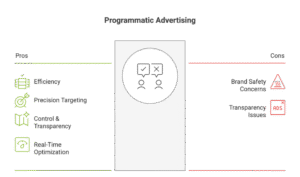
Efficiency
Programmatic automates repetitive tasks and streamlines workflow processes, saving time in the creation and management of campaigns. This efficiency allows marketers to spend time on complex tasks that require human oversight, such as planning custom campaigns and strategy.
Precision and Granular Targeting
Programmatic uses data and machine learning algorithms to deliver the most effective ads to relevant audiences. Advertisers can target users based on a wide array of signals, including: demographics, geography, interests, behaviors, time of day, weather, and device. This targeted approach makes the process more effective and minimizes ad fraud risk, cutting down on wasted ad impressions.
Control, Transparency, and Reliability
Unlike traditional media buying, where ads were purchased in bulk, advertisers using programmatic know where their ads will appear. This provides greater confidence in appearing in relevant brand environments. Furthermore, computer mechanisms are generally more reliable than manual work, as they are free from human errors. While programmatic provides control over viewability and placement, brand safety and transparency remain top-of-mind concerns, which are addressed by Amazon Ads and third-party solutions.
Real-Time Measurement and Optimization
Programmatic offers real-time measurement and optimization to drive maximum results. Advertisers can evaluate campaign and creative effectiveness mid-campaign through reporting on metrics such as CTR, CPC, overall spend, and conversions. This flexibility allows advertisers and publishers to make changes at any point during a campaign.
Transaction Types and Advertising Channels
Types of Programmatic Deals
Beyond the open auction (RTB), advertisers can use specialized transaction types:
- Real-Time Bidding (RTB) / Open Marketplaces: The most common method, where bids are placed in open auctions.
- Private Marketplace (PMP): Invite-only systems where publishers make premium inventory available to a select group of buyers.
- Programmatic Guaranteed: Advertisers purchase a guaranteed number of impressions at a fixed rate, decided manually without bidding. This is ideal for campaigns requiring high-quality placements and predictable delivery.
- Preferred Deals: These allow advertisers to negotiate a fixed price for premium inventory, offering the flexibility to choose whether to purchase the available space.
Programmatic Channels and Formats
Programmatic purchasing encompasses a wide range of digital formats:
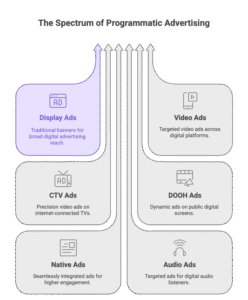
- Display: The oldest form of digital advertising, typically appearing as banners.
- Video: Programmatic video allows marketers to target ads across various digital platforms, and programmatic video ad spending is increasing faster than non-video ad spending.
- Connected TV (CTV): Delivering video ads to viewers via internet-connected TV devices. CTV is one of the fastest-growing channels and allows more precision than traditional linear TV.
- Digital Out-of-Home (DOOH): Uses digital screens in public places (e.g., bus stops, malls) to display dynamic ads.
- Native Ads: Designed to blend in seamlessly with the surrounding content, often leading to higher engagement.
- Audio: Targets listeners streaming podcasts, music, and digital radio.
- In-Game: Placing ads directly within PC, console, and mobile games.
Strategic Roadmap: Implementing Successful Programmatic Campaigns
For those new to programmatic, a clear implementation process is crucial:
Step 1: Define Goals and KPIs
Set clear, achievable goals, such as driving new product discovery or increasing sales. Knowing your goals will help determine if you are “hitting the mark”.
Step 2: Know Your Target Audience
Analyze existing customer data to identify key demographics, interests, and behaviors. Segmenting the audience is essential to tailor messaging and targeting for the biggest impact, as casting a wide net can lead to wasted ad spend. Targeting broad audiences typically results in lower CPMs than targeting a niche audience.
Step 3: Choose the Right Platform and Account Setup
Research and evaluate various DSPs for features like ease of use, access to inventory, and reporting capabilities. Once a DSP is chosen (such as Amazon DSP), ensure tracking mechanisms—like pixels or tags—are set up correctly to monitor user interactions and track performance.
Step 4: Creative and Bidding Strategy
Design creative assets based on the specifications of each channel. Develop a bidding strategy based on campaign duration and audience size, as this helps determine the CPMs needed to win the bid. CPM bid levels vary by media type; generally, display demands the lowest CPMs, whereas video demands the highest.
Optimization and the Future: Advanced Trends and Challenges
Measurement Beyond the Click
Programmatic campaigns must be constantly monitored and analyzed. Measurement should focus on Key Performance Indicators (KPIs) that map back to business objectives:
| Goal | Suggested KPIs |
|---|---|
| Branding and Awareness | Reach/unique reach, average frequency, brand lift, views. |
| Interest and Consideration | Completed views, clicks/site visits, detail page views, engagements, leads/cost per acquisition (CPA). |
| Purchase | Return on ad spend (ROAS), return on investment (ROI), sales, subscriptions, advertising cost of sales (ACOS). |
Beyond traditional metrics, focus on outcome-driven metrics like conversions and average order value. Attention metrics are also gaining ground as a key measurement, focusing on how many people actually viewed the ad and the quality of engagement achieved.
Future Trends and Challenges of Programmatic Advertising
- AI and Machine Learning: AI engines can predict user behavior and tailor ads in real time. AI-driven algorithms will play a larger role in optimizing bids and dynamically adjusting creatives.
- Data Privacy: Regulations like GDPR and CCPA require transparent and ethical data practices. Advertisers must ensure their DSPs are compliant.
- Learning Curve: Programmatic requires a learning curve that may initially feel overwhelming. Working with partners, agencies, or directly with providers like Amazon Ads can ease this transition.
Conclusion
Programmatic advertising has transformed media strategies by providing a data-driven, automated, and real-time optimized system that ensures precision, scalability, and efficiency. Advertisers who leverage these platforms can minimize risk and ensure a high return on investment.